You’ve probably seen it: the hairline crack running along the wall near a meeting room AC vent, or wallpaper starting to lift at the seam a few months after the fit-out was finished. It’s a common complaint from office managers across Abu Dhabi, and it usually has nothing to do with a bad contractor. It’s the climate.
Abu Dhabi doesn’t play fair with wall finishes. Before you choose one, it’s worth understanding why.
The Real Culprit Isn’t Just Humidity
Relative humidity here climbs past 80% in summer. Some sources put the coastal average closer to 55-65%, with sharper spikes in winter; the numbers vary by source, so it’s smarter to think in ranges rather than chase one exact figure.
But humidity alone isn’t what’s cracking your paint or lifting your wallpaper. It’s the daily swing between outdoor heat that can hit 42-48°C and an office interior sitting at a controlled 22-24°C. Walls absorb that back-and-forth constantly, and over months, that repeated stress is what shows up as cracks, bubbles, and peeling.
So, the question isn’t “which finish looks best on install day.” It’s which one can take that daily hot-cold, wet-dry cycle without falling apart.
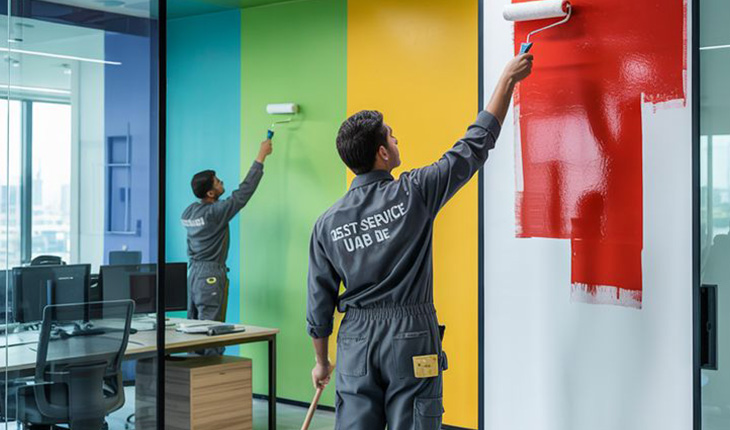
Paint: Cheap and Fast, But It Won’t Go the Distance
Paint is still the go-to for most Abu Dhabi office fit-outs, and that makes sense; it’s quick, it’s affordable, and touch-ups are easy. In an average office, expect 3-5 years before it needs redoing. Private rooms with less foot traffic and less light exposure can push closer to 7 years. Cost-wise, you’re generally looking at 12-25 AED per square metre, and Abu Dhabi tends to run 5-20% cheaper than Dubai for the same job.
A quick breakdown of finish types:
- Matte or flat paint hides small wall flaws nicely, but it’s a pain to clean; better for ceilings than busy areas.
- Eggshell is what most offices end up choosing. It looks professional, wipes down easily, and works well in meeting rooms and private offices.
- Satin has more sheen and holds up to wiping better, which is why it shows up in corridors and high-traffic zones.
- One thing people forget: fluorescent office lighting makes matte and eggshell look better than higher-gloss paint, since there’s less glare bouncing off the wall.
The downside is straightforward; paint cracks when the wall keeps expanding and contracting behind it, and it doesn’t do anything for you acoustically or texturally. It’s just color on a surface.
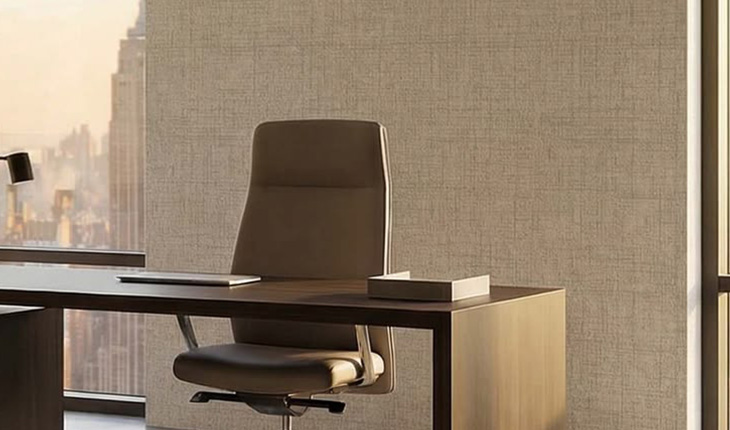
Wallpaper: More Design Freedom, More Room for Things to Go Wrong
If you want pattern, texture, something with more visual personality than flat paint, wallpaper is tempting. But here’s the problem in this climate: the adhesive needs time to cure properly, and high humidity slows that process down. In offices with frequent humidity or temperature shifts, that often means bubbling or peeling within 6 to 12 months.
There’s a less obvious risk too. When moisture gets trapped behind wallpaper, mold can start growing where nobody sees it, and certain mold types aren’t just a cosmetic issue; they can affect indoor air quality and cause respiratory irritation. Non-woven wallpaper handles humidity a bit better than standard types, but even then, it’s rarely the right call for a space that goes through daily humidity swings the way an Abu Dhabi office does.
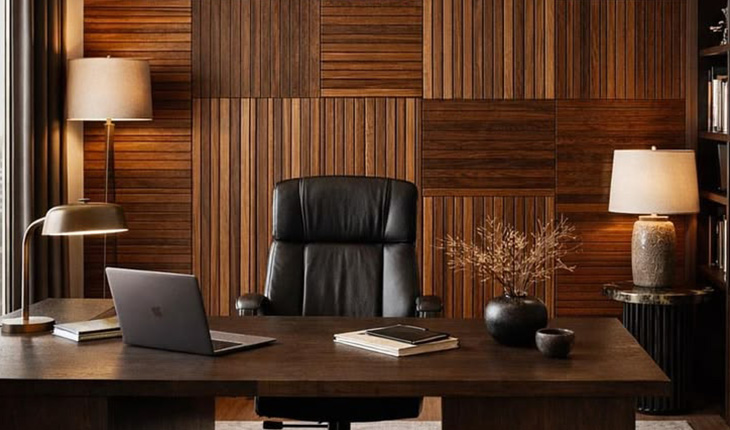
Wood Cladding: The Finish Actually Built for This Climate
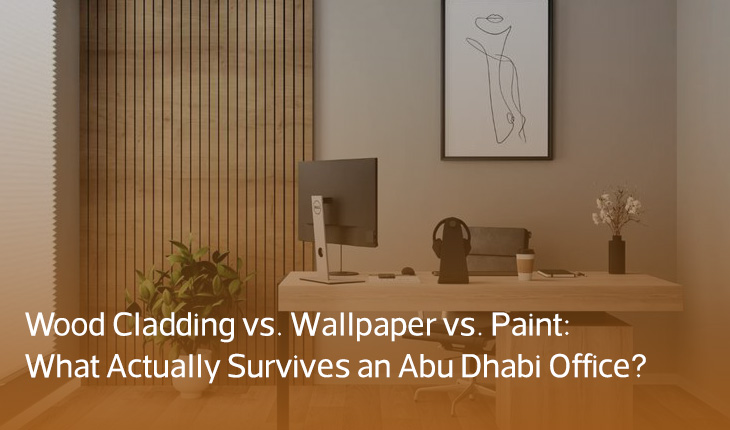
Wood cladding isn’t trendy for the sake of being trendy; it genuinely performs better here. MDF and wood-effect panels typically last 10 to 20 years indoors, and acoustic panels land in roughly the same range with basic upkeep. That’s a very different conversation from repainting every few years.
On cost, panels generally run 250-600 AED per square metre, though the full market range stretches from around 80 AED for economical WPC options up to 900 AED and beyond for premium solid wood. Given that Abu Dhabi pricing usually sits 5-20% below Dubai, most local projects land somewhere in the lower-to-mid range.
What we’re seeing on-site across Abu Dhabi offices right now:
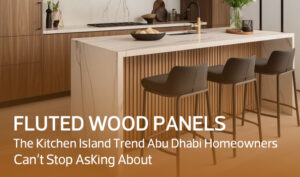
- Fluted panels: vertical ribbed profiles, currently the most requested style for reception walls, add depth and quietly cover up minor wall imperfections
- Slat panels: spaced vertical slats mounted over a black backing, which also function as acoustic treatment
- Tambour panels: flexible enough to wrap around columns or curved walls, useful where straight panels can’t go
- Finish options range from natural wood grain and warm oil finishes to higher-gloss lacquer, or neutral painted tones like off-white and warm grey
- Some newer systems build LED lighting directly into the panels
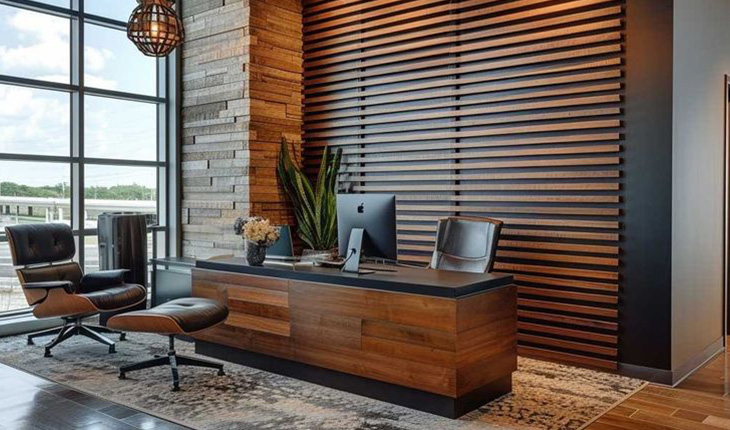
Does Wood on the Walls Actually Change How People Work?
This part surprised a few clients when we first brought it up, so worth mentioning. A Human Spaces study found offices with natural elements saw a 15% jump in creativity. Separately, researchers at the University of British Columbia found that exposure to wood lowers stress-related nervous system activity and reduces heart rate. And a Forest and Wood Products Australia survey of 1,000 employees linked visible wood in the workplace to lower absenteeism and sharper focus.
It’s not just an aesthetic choice at that point; it’s a workplace decision.

So, What Should You Actually Pick?
If the wall barely gets touched and budget is tight, paint still does the job fine. If you’re set on wallpaper, keep it to low-humidity, low-exposure corners and check it regularly. But for reception areas, meeting rooms, or anywhere that needs to look good for years without constant redoing, wood cladding is the one built to actually survive Abu Dhabi’s climate, and it happens to make the office quieter and more pleasant to work in along the way.
That’s the kind of wall finish Wood Worx builds for: fluted, slat, and tambour paneling designed around Abu Dhabi conditions, not imported assumptions from somewhere else.