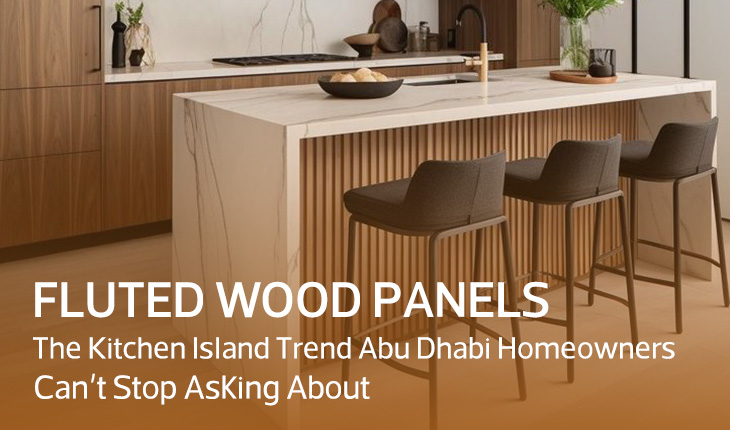
If you’ve spent any time scrolling through kitchen inspiration lately, you’ve probably noticed the same detail showing up over and over: vertical grooves running down a kitchen island, catching the light in a way flat cabinetry just can’t. That’s fluted wood paneling, and lately it’s become one of the most requested features we hear about at Wood Worx.
So, we figured it’s worth breaking down properly, what fluted panels actually are, why they work so well on a kitchen island, and a few honest things to think about before you add them to your own kitchen.
What Are Fluted Wood Panels, Exactly?
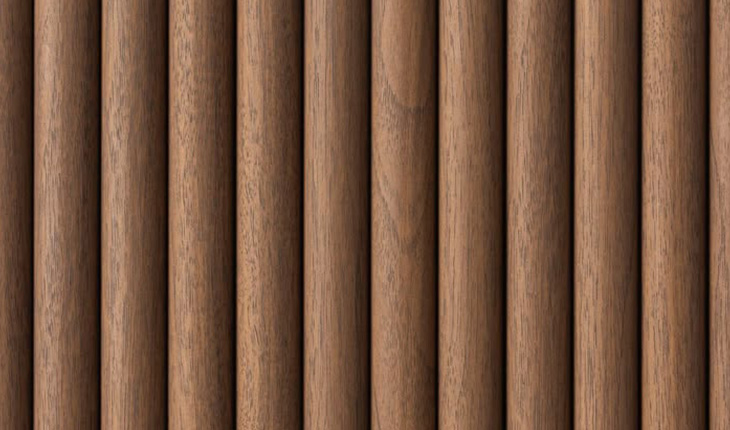
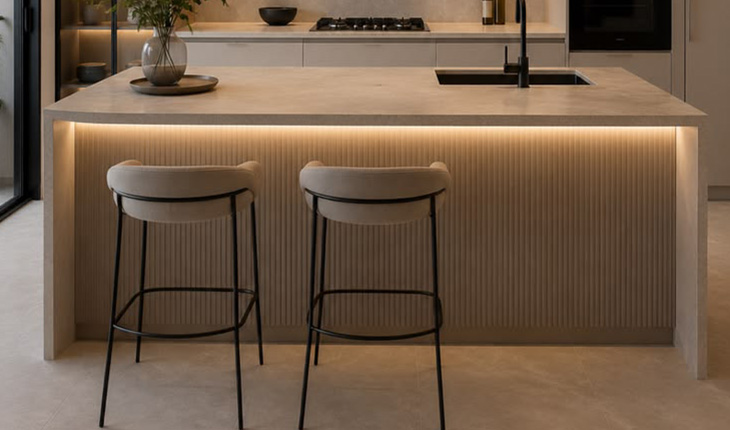
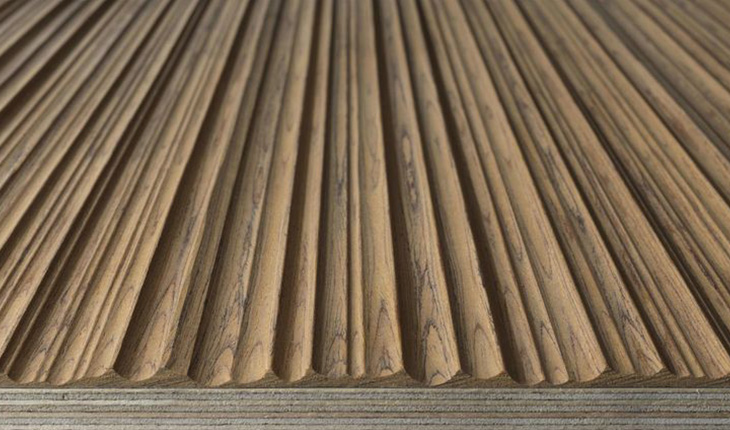
Fluted panels are wood surfaces shaped with a series of repeated grooves, usually vertical, that turn what would normally be a flat, plain cabinet front into something with real depth. Instead of one smooth surface, you get a rhythm of ridges and shadows that shifts throughout the day depending on how the light hits it.
It’s not actually a new idea, if anything, it’s one of the oldest. Fluting goes back to classical Greek and Roman columns. It’s just been brought back in a modern way, and now it’s one of the defining features you’ll see in minimalist, Japandi, Scandinavian, and contemporary luxury kitchens across Abu Dhabi and beyond.
Why Does Everyone Want It on the Island Specifically?
The island is usually the first thing your eye lands on when you walk into a kitchen. It’s the natural centerpiece, so it makes sense people want it to feel like more than just a functional block in the middle of the room. Fluted panels give it:
- A stronger sense of character, instead of blending in
- A more boutique, tailored feel
- Depth that actually changes with the light during the day
- A subtle interplay of shadow and texture that flat panels simply can’t replicate
Instead of leaning on bold colors or busy patterns to make a statement, fluted panels let the wood grain and the craftsmanship speak for themselves.
Why It Just Feels Warmer
There’s a reason this trend hasn’t faded; it genuinely changes how the wood reads in a room:
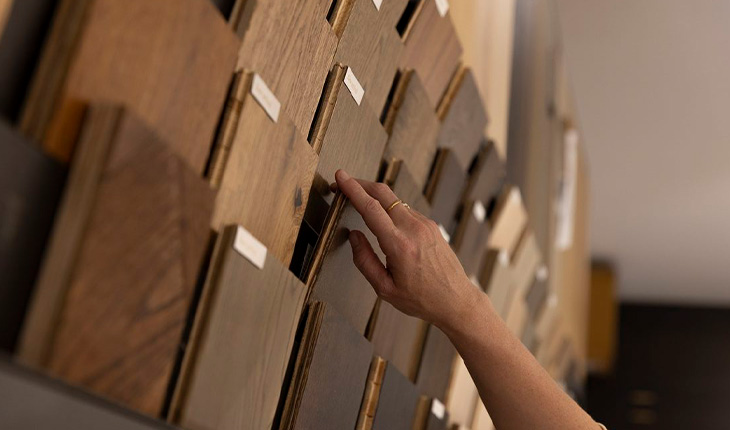
- The grooves catch light and shadow in a way that brings out the natural grain far more than a flat surface would
- Every ridge casts its own small shadow, so the island looks slightly different depending on the time of day, which keeps it visually alive
- You get real texture and richness without needing loud colors or heavy detailing, so the design stays calm rather than busy
It’s a small architectural detail, but it’s the kind of thing that makes a kitchen feel considered rather than just built.
Is This Just a Trend, or Is It Here to Stay?
Given that fluting has been around in one form or another for centuries, most designers we work with don’t treat it as a passing fad. It’s less about chasing what’s popular this season and more about a detail that consistently reads as high-end, regardless of what’s trending on Instagram that month.
Choosing Your Wood and Finish
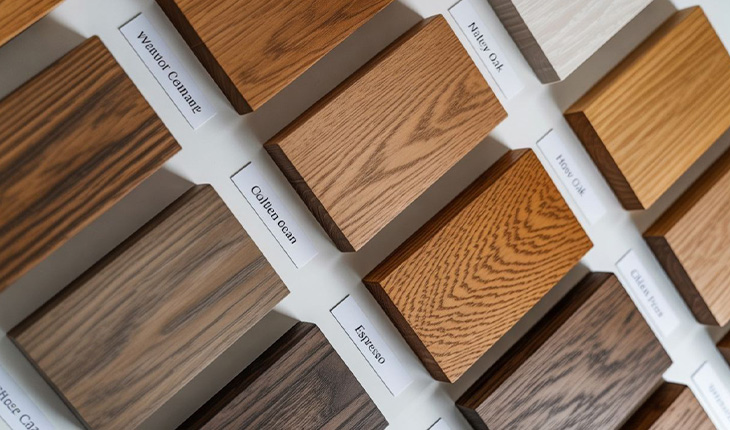
The species you choose genuinely changes the entire mood of the island. The most commonly requested include:
- Oak, still the most popular choice by far
- Walnut
- Ash
- White Oak
- Smoked Oak
If budget is a bigger factor, MDF with a natural veneer, or a painted MDF finish, can get you a very similar look for noticeably less. This is a conversation we have with a lot of our clients early on, and it’s a perfectly practical way to go.
As for color direction this year, there are really two clear paths. Lighter tones like natural oak, white oak, or blonde oak open the space up, reflect more light, and lean into that airy Japandi feel. Darker tones like walnut or smoked oak bring a moodier, almost hotel-like luxury and create a striking contrast against white marble countertops.
What Pairs Well With It
Fluted wood tends to look its best when it’s balanced against something smoother. The combinations that consistently work well include marble, quartz, travertine, or limestone countertops, paired with brass, matte black, or bronze fixtures and hardware. It’s that contrast between the softness of stone and the rhythm of the wood that makes the whole thing feel pulled together instead of overdone.
You Don’t Have to Flute the Whole Island
There’s more than one way to bring this into a kitchen. Some options we regularly design around:
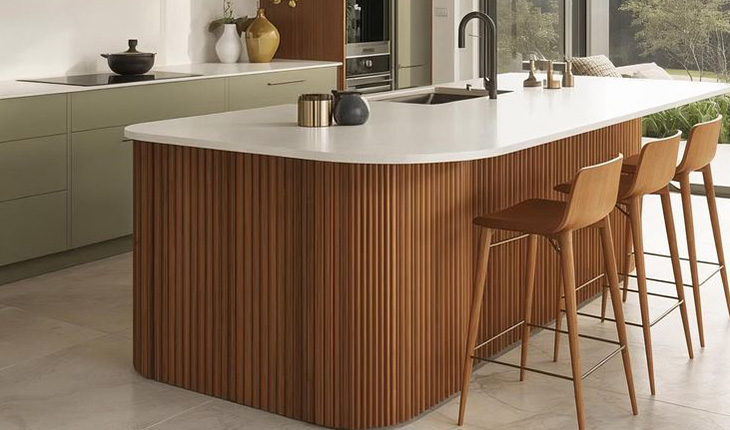
- Covering the full island, which gives the most dramatic, luxurious result
- Just one front panel, a good option if you want the look without the full cost
- Fluted edges or accents only, used to frame the piece rather than take it over
- Curved fluted corners, which have become increasingly popular for the softer, safer silhouette they create in busy kitchens
A Few Honest Things to Consider
Fluted panels aren’t completely maintenance-free. The grooves can collect dust and cooking grease over time, so they need a bit more regular cleaning than a flat surface would. The joinery also has to be precise, this isn’t something you want to cut corners on, and the cost does run a little higher than standard flat cabinetry.
Because of that, a lot of designers, including our own team, tend to recommend using fluted panels as an accent rather than covering every single cabinet in the kitchen. Given room to stand out, it makes a much stronger impression.
Where Wood Worx Comes In
We design and build wooden custom kitchens, dressing rooms, and wall cladding right here in Abu Dhabi, and fluted island fronts have genuinely become one of our most requested details this year. Whether you’re picturing a light natural oak island with that soft Japandi feel, or a bold smoked oak statement piece, we handle everything ourselves, from choosing the right wood to the precision joinery that makes the whole thing work.
If you’re planning a kitchen renovation or starting from scratch, we’d genuinely love to talk through what a fluted island could look like in your space.